Lawrence Livermore National Laboratory researchers have developed a camera-based inspection system that can monitor complex 3D-printed structures layer by layer, using AI and machine learning to measure tiny variations and potentially identify problems before a part ever leaves the printer.
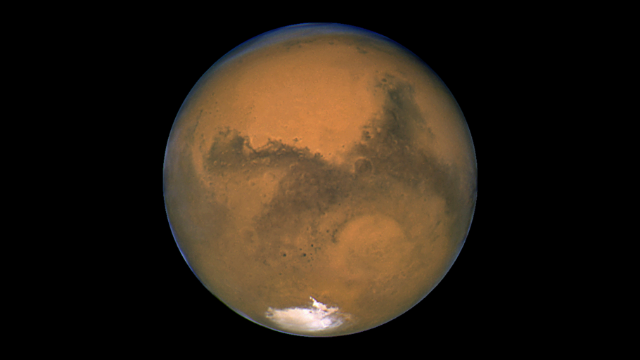
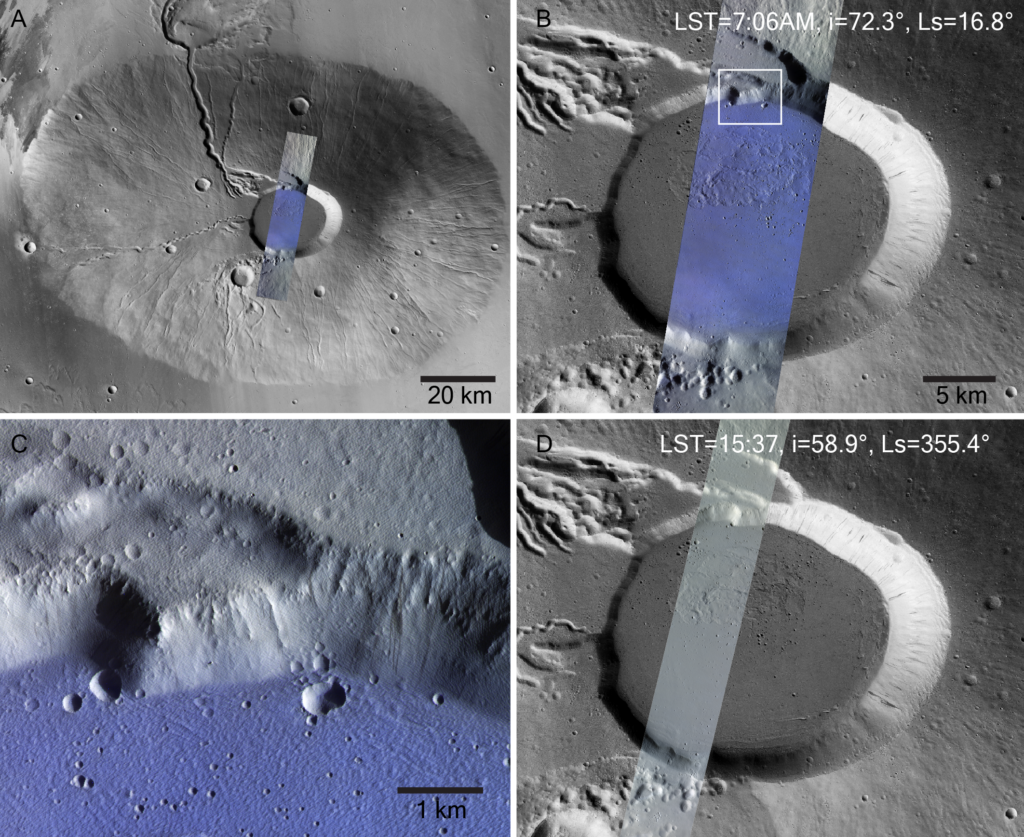
Water frost only about 10 micrometres thick appears for a few cold-season morning hours across four giant Martian volcanoes. Its vast coverage may exchange approximately 150,000 tonnes of water with the atmosphere each day.
Minimal cells offer a platform to uncover the fundamental physicochemical principles of cellular life. While genomes, proteomes, and metabolic networks of cells have been elucidated, the lipidome, which determines the physicochemical identity of the membrane, remains only partially characterized. Yet, the membrane is a central determinant of cellular viability, regulating solute permeability, mechanical stability, and environmental cues. Here, we investigate membranes that recapitulate the lipid composition of the minimal cell JCVI-syn3A, which is distinguished by an unusually high cholesterol content and simple composition. Combining cryo-electron microscopy, Langmuir monolayer experiments, permeability assays, and coarse-grained molecular dynamics simulations, we demonstrate that cholesterol and sphingomyelin act as dominant condensing agents that stabilize the membrane while preserving an ordered yet fluid state. These lipids enhance lipid packing and acyl-chain order, whereas cardiolipin, POPC, and DOPG counterbalance condensation by promoting fluidity and compressibility. Cholesterol–sphingomyelin interactions emerge as a key thermodynamic driver that fine-tunes membrane order, fluidity, and permeability. Remarkably, membranes containing up to 60 mol% of cholesterol remain permeable to water and physiologically relevant osmolytes at rates compatible with growth of JCVI-syn3A. Together, our results define the physicochemical principles underlying minimal cell membranes and reveal how lipid composition enables passive permeation while maintaining membrane integrity. JCVI-syn3A, a model of minimal cellular life, relies on a cholesterol-rich membrane whose properties remain poorly understood. Here, authors show how cholesterol and sphingomyelin balance membrane order, fluidity, permeability, and mechanical stability to support minimal cell function.
Two professors in the Department of Civil and Environmental Engineering (CEE) at the University of Tennessee, Knoxville are helping NVIDIA integrate atmospheric composition into its Earth-2 AI foundation model ecosystem to establish an AI framework for a combined weather-air quality prediction.
A new paper led by Bigelow Laboratory scientists explores the history of lobster forecasting in Maine and Atlantic Canada, offering lessons for making ecological forecasts more useful for coastal stakeholders.
 Technology